The Story
Zaōq.
A taste worth keeping.
Zauq is an Urdu word that doesn't translate cleanly into English, and that is the point.
It means taste, but not the taste on your tongue. It means discernment: the refined ability to tell the good from the merely fine, the genuine from the imitation. The Mughal poets used it for a cultivated sensibility - the mark of someone who had learned, slowly, how to appreciate things properly. Ghalib used it for the ache of pleasure. The old kitchens used it for the cook's instinct: the moment a marinade has waited long enough, the breath of saffron that lifts a dish from dinner into memory.
We took the name because it is a high standard to hold yourself to. Every evening, quietly, we try to earn it.
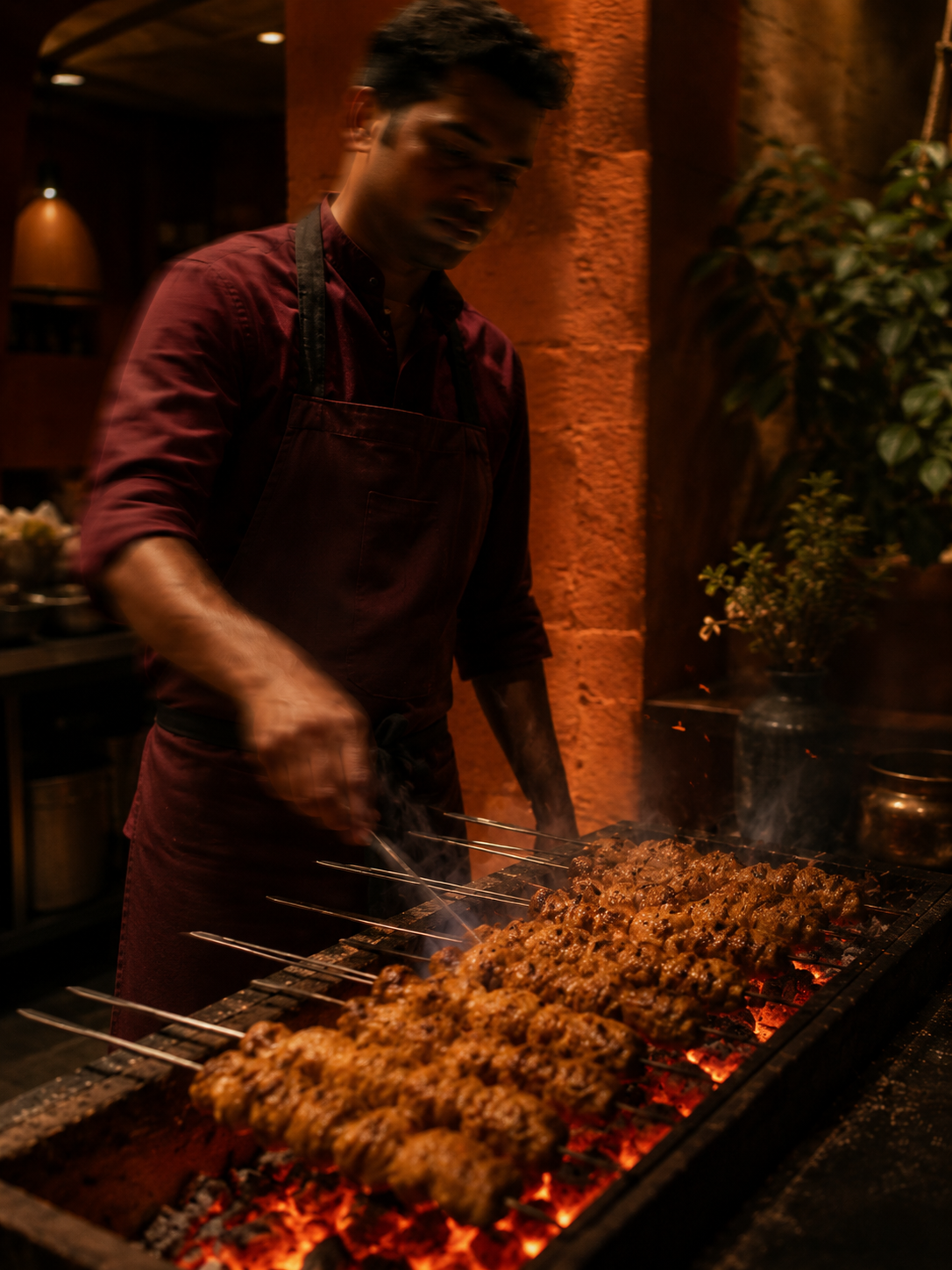
Sheekh on skewer, smoke on coal -
the slow patience of fire.
Our kitchen belongs to no single city.
It draws from the great traditions of the subcontinent - the Awadhi courts of Lucknow, the tandoors of Punjab, the spice of Peshawar and Lahore, the copper handis of Kashmir.
The Kakori on our menu comes from Lucknow, where mutton was once pounded so fine that a toothless old nobleman could still eat it. The Burra comes from Punjab, where lamb chops were marinated twice because once was never enough. The Raan-e-Nawabi is a whole leg of lamb, slow-roasted for the better part of a day until it carves with the side of a spoon. The Phirni is set in clay cups because the earth holds cold the way silver cannot.
What unites these dishes is not a region but a way of cooking - slow, patient, generous. A clay oven heated until the air above it shimmers. A marinade left overnight, not because anyone is in a hurry, but because the meat is waiting too. A handful of saffron held back for the last minute. We do not chase shortcuts, and we do not pretend that good food can be rushed.
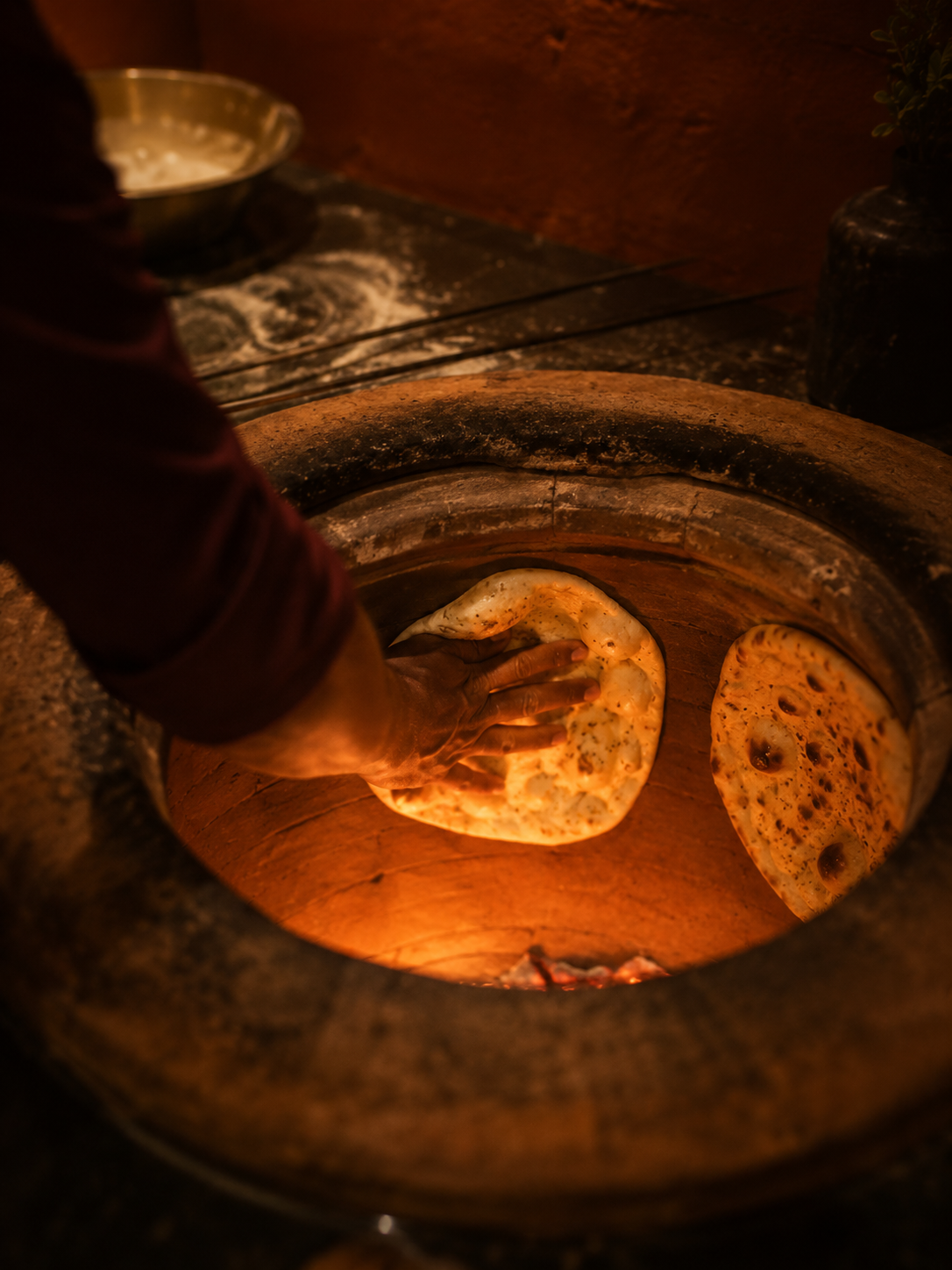
Clay, fire, and a steady hand -
the oldest oven we know.
Zaōq is not a restaurant in the usual sense.
We made that choice deliberately.
By doing away with the room, we put everything into the kitchen. No part of what you pay goes toward white tablecloths, mood lighting, or the theatre of service. It goes into the meat, the spices, the saffron, and the hours. What you receive is restaurant-grade Mughlai food, the kind that usually demands a reservation and a long evening - delivered to your door, or ready for you to collect, with none of the fuss.
This is luxury, reimagined for the way people actually want to eat now. At your own table. In your own time. On your own terms. The only thing we ask is that you come to it hungry, and that you eat it the way it was meant to be eaten - slowly, and with your hands if you can.
Zaōq - a taste worth keeping.
Return to Zaōq→